
Metal Recycling
Metal recycling facilities and recovery plants require advanced magnetic separation technology and customised processing solutions that maximise material recovery and efficiently handle complex, mixed-material streams.
BlakerTech’s density separation systems, eddy current separators, and engineered equipment deliver high-performance separation across a wide range of metal recycling applications, enabling operators to extract greater value, reduce contamination, and optimise operational costs.
Metal Recycling Applications


-
Shear Scrap
-
The UK metal recycling industry handles more than 10 million tonnes of ferrous and non-ferrous scrap each year, with a large share coming from shear scrap produced by shearing and fragmentising end-of-life metal products. Although this material offers strong recycling value, it can be difficult to process due to its mixed composition, residual contaminants, and fine metal content.
Standard magnetic separation removes most ferrous materials, but high-value non-ferrous metals such as aluminium, copper, and brass often remain within the shredded mix. Losing these fine metals reduces overall recovery value and increases disposal costs.
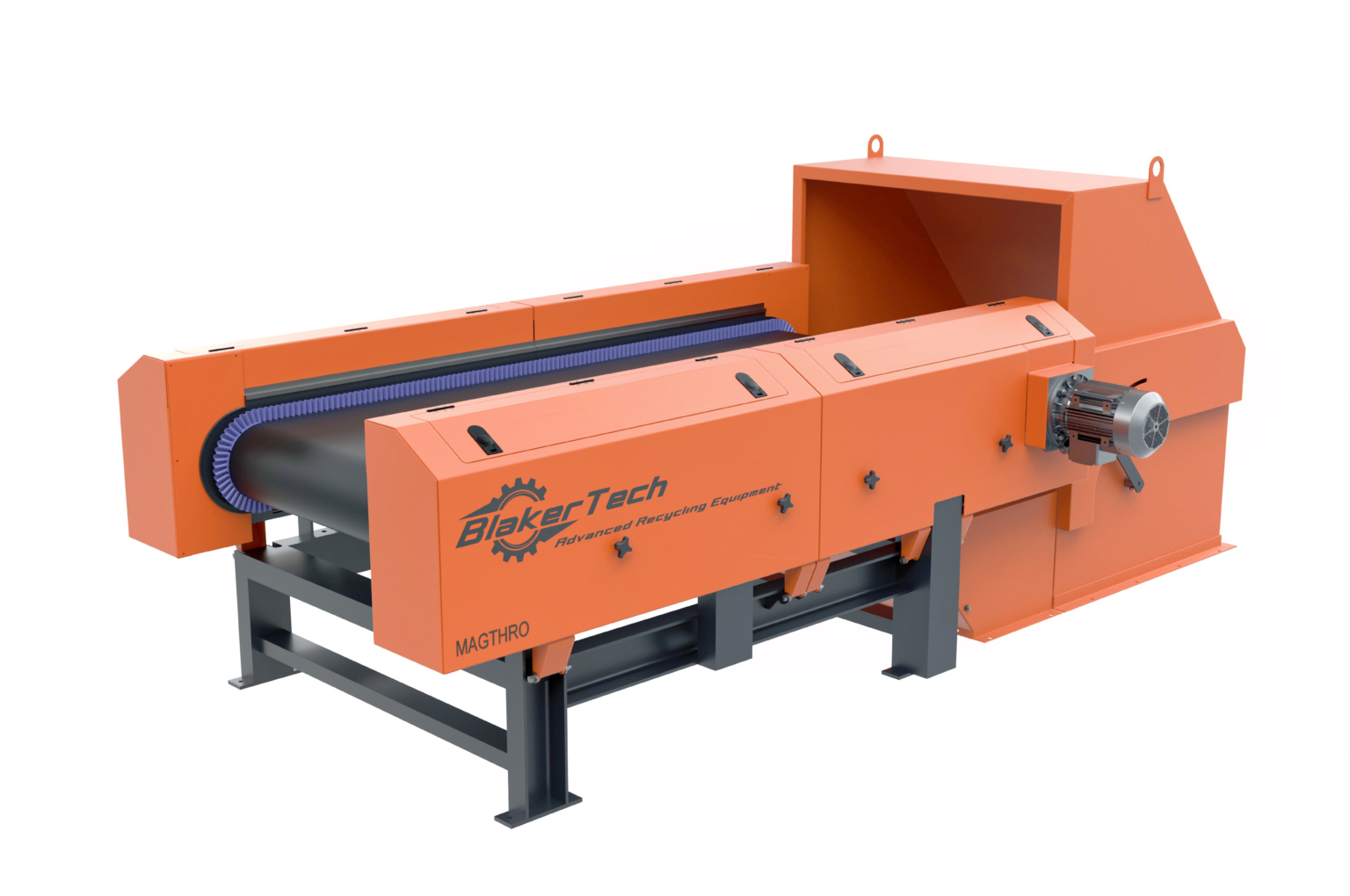
Non-ferrous metals generally make up around 5–10% of total shredder output by weight, so efficient recovery using eddy current separation can significantly improve financial return and reduce environmental impact. Designed for heavy-duty recycling operations, the MagThro integrates easily into existing shear or shredder lines, delivering reliable performance, low maintenance, and strong recovery of both coarse and fine non-ferrous fractions.
BlakerTech’s MagThro Eddy Current Separator is engineered to maximise non-ferrous metal recovery from shear scrap streams.
-
Auto Shredder Residue (ASR)
-
The UK automotive recycling industry processes more than two million end-of-life vehicles each year, producing large volumes of Auto Shredder Residue (ASR). This residue is a complex mix of plastics, rubber, textiles, glass, dirt, and fine metal fragments. Although ASR was once treated largely as waste, it is now recognised as a valuable material stream due to its recoverable non-ferrous metals.
ASR is one of the most challenging materials to process. Its fine particle size, high contamination levels, and mix of lightweight fractions make it difficult to extract valuable metals. While magnetic separation removes the majority of ferrous metals, significant amounts of aluminium, copper, zinc, and trace precious metals often remain within the residue.
BlakerTech’s MagThro Eddy Current Separator is specifically engineered to address these challenges. Its advanced eddy current separation system efficiently targets non-ferrous metals within even the finest ASR fractions, preventing valuable material from entering landfill or low-value waste streams. With recovery rates of up to 95%, the system delivers strong environmental and financial benefits.
Built for durability and high throughput, the MagThro integrates easily into both new and existing shredder recovery lines, providing consistent performance under demanding conditions.
-
Aluminium Recycling
-
Aluminium is one of the most valuable materials in recycling, retaining its properties through repeated processing. With applications across packaging, automotive, construction, and industrial manufacturing, high-quality recovered aluminium remains in constant demand.
Scrap aluminium enters recycling streams in many forms, including sheet, extrusions, cast components, foils, UBCs, and mixed non-ferrous fractions. These materials often contain plastics, steel, coatings, or other contaminants that must be removed to maximise resale value and ensure consistent downstream quality.
BlakerTech provides engineered systems designed to optimise aluminium recovery within both standalone operations and full processing lines. Our MagThro Eddy Current Separator, built in the UK for high-duty environments, delivers precise non-ferrous separation across a broad range of feedstocks.
It efficiently recovers light and heavy aluminium fractions, including sheet and profile waste, cast aluminium, turnings and machining scrap, foils and packaging materials, and used beverage cans
-
E-Waste and WEEE Recycling
-
Recycling e-waste and WEEE (Waste Electrical and Electronic Equipment) is essential for recovering valuable resources and reducing the environmental impact of discarded electronics. Devices such as computers, printers, appliances, and consumer electronics contain significant quantities of copper, aluminium, precious metals, and other high-value materials that can be efficiently reclaimed.
Electronic scrap can range from complete products to shredded or mixed fractions, often containing plastics, steel, and other contaminants. Effective processing relies on equipment capable of handling varied feedstocks while delivering clean, high-purity outputs. BlakerTech’s advanced systems help operators turn complex electronic waste streams into profitable, recoverable resources.
The MagThro Eddy Current Separator is central to this process, delivering high recovery rates across both ferrous and non-ferrous metals, including fine and intricate fractions. Its consistent, high-throughput performance enables recyclers to maximise material value and improve overall processing efficiency.
-
Foundry Residue
-
Foundry residues, including casting waste, sand, and slag, often contain significant quantities of recoverable ferrous and non-ferrous metals, along with materials that can be reused within manufacturing processes. These residues vary widely in composition, particle size, and contamination levels, making effective separation essential for maximising value.
With the right processing technology, even challenging residue streams can be converted into sustainable and profitable outputs. BlakerTech supports foundries in achieving this by providing systems designed to improve recovery rates and reduce environmental impact.
The MagThro Eddy Current Separator plays a key role, delivering reliable, high-throughput metal recovery across diverse foundry residues and enhancing overall operational efficiency.
-
Shredder Scrap
-
Shredder scrap is one of the most valuable yet complex material streams in metal recycling. After shredding, the material becomes a dense mix of ferrous and non-ferrous metals, plastics, rubber, and fine residues. Recovering high-value metals from this blend requires a separation system capable of delivering accuracy, consistency, and high throughput.
BlakerTech’s MagThro Eddy Current Separator is designed specifically for demanding shredder operations. It delivers continuous, reliable separation of aluminium, copper, brass, and other non-ferrous metals from mixed streams, including fine fractions that many standard systems fail to capture.
With non-ferrous recovery rates averaging up to 95%, the MagThro helps operators maximise material value, reduce waste disposal costs, and improve overall process efficiency. Its robust, integration-ready design makes it a strong addition to both new and existing shredder lines, enabling recycling facilities to unlock the full value of their shredder scrap.
-
Cable Recycling
-
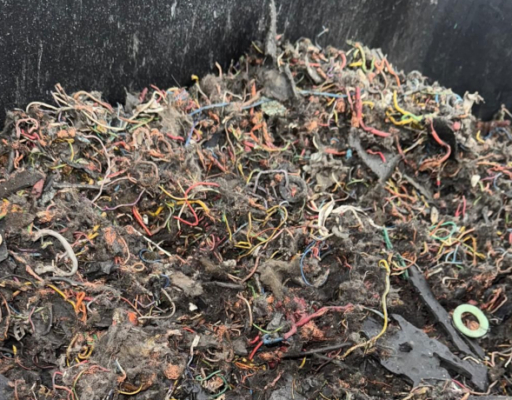
Recycling cables and other metal-bearing materials is both profitable and environmentally sustainable, with copper, aluminium, and other non-ferrous metals providing strong returns.
BlakerTech’s MagThro Eddy Current Separator is designed to maximise metal recovery efficiency in cable recycling and other non-ferrous metal separation operations.
By generating powerful magnetic forces, it effectively separates valuable metals from plastics and other non-metallic materials, enabling operators to achieve higher-value output and improved overall profitability.
-
Incineration Bottom Ash (IBA)
-
In the UK, incineration bottom ash (IBA) from municipal waste-to-energy facilities represents a significant metal recovery opportunity, often accounting for around 20% of input by mass.
Recovering valuable metals from IBA is challenging due to fine particle sizes, high contamination, and a mixed mineral-metal composition. While traditional magnetic separation efficiently extracts ferrous metals, non-ferrous fractions such as copper, aluminium, and trace precious metals are often lost, particularly in the finest fractions.
With inert mineral content often exceeding 70–80% of IBA by weight, reclaimed materials can be reused as substitute aggregate or fill, delivering both economic and environmental benefits. Installed downstream of ferrous separation and screening, the MagThro provides reliable, high-value metal streams and superior recovery of fine non-ferrous particles, even under damp, sticky, or dusty conditions.
BlakerTech’s MagThro Eddy Current Separator is engineered to meet these challenges. Powerful eddy currents propel conductive non-ferrous particles away from the inert ash matrix, enabling recovery of high-value metals that would otherwise be discarded.
Our Metal Recycling Solutions

SandFlo
MagThro

Feeder Shaker
Read Our Google Reviews
Our Case Studies

Your Questions, Answered
Can’t find what you’re looking for? Get in touch with us today.
-
What metal recycling applications are best suited to eddy current separation?
-
Eddy current separators like MagThro are ideal for high-volume metal recycling applications, including:
- Shredder scrap and shear scrap
- Mixed metal waste streams
- Aluminium recycling
- WEEE and electronic waste facilities
- Any application where non-ferrous metals need separation from mixed materials
MagThro excels at separating both fine and heavy material fractions, making it highly effective across a wide range of particle sizes.
BlakerTech also designs complete, bespoke processing lines, integrating MagThro eddy current technology with custom conveyors, hoppers, and material handling systems tailored to your facility’s throughput and metal recovery goals.
-
Can BlakerTech systems handle heavily contaminated metal scrap?
-
Yes. BlakerTech’s metal separation and recycling solutions are engineered for real-world recycling conditions, effectively processing scrap contaminated with plastics, rubber, wood, ash, glass, and other non-metallic materials.
-
What's the difference between density separation and eddy current separation for metals?
-
The MagThro Eddy Current Separator relies on a high‑speed rotor with strong neodymium magnets. As materials pass by the rotor, conductive non‑ferrous metals (aluminium, copper, etc) have eddy currents induced in them. Those currents generate repelling forces which eject them from the mixed waste flow into defined non‑ferrous streams.
The SandFlo uses a fluidised bed of sand plus air to separate materials by density: lighter metals (e.g., aluminium, magnesium) float nearer the surface, heavier metals (e.g., copper, brass, zinc) sink deeper.
Many recycling operations benefit from using both technologies in sequence, with MagThro capturing conductive non-ferrous metals first, followed by SandFlo for further separation of metals based on density or recovery of fine fractions that eddy current alone may miss.
The choice between the two depends on material type, particle size, contamination level, and the desired recovery outcome.
-
How fine material size can your systems recover non-ferrous metals?
-
BlakerTech’s separation solutions are engineered to handle a wide range of metal sizes, from coarse, heavy fractions to very fine non-ferrous particles.
The MagThro Eddy Current Separator is particularly effective at recovering small aluminium, copper, and brass fragments that might otherwise be lost, while the SandFlo Fluidised Bed Separator can further refine metal recovery by density, ensuring even fine fractions are captured.
Together, our systems allow operators to maximise metal recovery, reduce waste, and improve overall efficiency, even under challenging material conditions.
-
Will BlakerTech’s separation systems work with our existing processing line?
-
Yes. BlakerTech designs all separation and processing solutions to integrate seamlessly with existing equipment and workflows.
Our technical team carefully assesses your current setup, material flow, and space constraints, then engineer’s systems that can be retrofitted with minimal disruption.
Thanks to our efficient design, manufacturing, and implementation processes, installations are completed quickly, allowing you to upgrade your facility without interrupting operations.
-
What improvements in recovery rates should we expect?
-
While results depend on material type and existing process efficiency, BlakerTech systems consistently deliver measurable improvements in non-ferrous metal recovery.
Operators typically achieve a 5–10% increase in overall metal recovery, with even higher gains in fine fraction recovery that would otherwise be lost to waste streams. By combining precision magnetic and density-based separation technologies, our solutions maximise metal extraction, reduce landfill losses, and enhance operational profitability.
Need More Information?
If you can’t find what you are looking for, then please give me a call on 01403 783634 for a fast, friendly and helpful service.
James Ryan | National Sales Manager