
Our Metal Separation Products
BlakerTech designs and manufactures advanced magnetic separation equipment and fully bespoke recycling systems for metal recovery facilities (MRFs).
View our products below.
All Products
From high-performance eddy current separators and density separation systems to custom-designed conveyors, hoppers, and fully integrated processing lines, our UK-manufactured equipment delivers exceptional separation efficiency across diverse material streams. All systems are supported by a complete range of upstream and downstream equipment that integrates seamlessly into existing or new processing lines.
Our product range combines proven separation technology with expert engineering, ensuring every system is tailored to your specific throughput requirements, material characteristics, and facility layout. Whether retrofitting into an existing setup or developing a complete turnkey solution, we provide robust, high-performance equipment designed to optimise recovery and maximise productivity.

SandFlo
MagThro

Feeder Shaker

Hoppers

Conveyors

MagDrum
Your Questions, Answered
Can’t find what you’re looking for? Get in touch with us today.
-
What’s the difference between ferrous and non-ferrous metals, and why does this matter in metal separation processes?
-
Ferrous metals contain iron and are inherently magnetic, including materials such as cast iron, wrought iron, and steel. Non-ferrous metals, on the other hand, contain little or no iron and are non-magnetic, with examples including aluminium, copper, tin, zinc, lead, and brass.
Understanding this distinction is crucial for recycling and material recovery, as it determines the appropriate separation technology required to efficiently extract non-ferrous metals from mixed waste streams.
-
How does magnetic separation work in metal recovery?
-
Magnetic separation is a critical step in metal recovery, particularly when processing shredded or mixed waste streams.
Ferrous metals, which contain iron, are attracted to magnets and can be efficiently removed using magnetic separators such as drum magnets or overband magnets. This initial stage isolates magnetic materials from the remainder of the mix.
The remaining material typically includes non-ferrous metals (such as aluminium, copper, and brass) alongside plastics, wood, paper, and glass. To recover the non-ferrous fraction, the material is processed through an eddy current separator. These systems employ powerful Neodymium magnets to generate high-intensity magnetic fields, inducing currents in non-magnetic metals and propelling them away from the rest of the stream.
This process achieves efficient non-ferrous metal separation, producing two clean outputs: one containing non-ferrous metals and the other comprising residual non-metallic materials. Once separated, these can be directed into distinct collection streams for further processing or resale.
-
Why use Neodymium magnets in metal separation equipment, and what makes them different?
-
Neodymium magnets are the strongest commercially available permanent magnets and play a critical role in high-performance eddy current separators and other magnetic separation systems.
Unlike standard ferrite magnets, Neodymium magnets generate significantly stronger magnetic fields, enabling the efficient separation of smaller or lighter non-ferrous metals, including particles below 5 mm. This makes them ideal for processing mixed materials in metal recycling, such as aluminium, copper, and non-magnetic minerals.
Their strength enhances metal recovery rates, reduces contamination, and improves the overall purity and value of recovered materials. Additionally, their compact size allows for more efficient system design with lower energy requirements.
-
What technologies are used to separate non-ferrous metals in recycling plants?
-
Modern recycling facilities employ a combination of advanced technologies to maximise non-ferrous metal recovery and overall efficiency. Key components typically include:
- Vibrating feeders to ensure a consistent, single-layer flow of material.
- Eddy current separators with Neodymium magnets for precise non-ferrous metal extraction.
- Magnetic separation systems, such as drum magnets or magnetic pulleys, for upstream removal of ferrous metals.
- Optical technologies, including colour sorters, laser sensors, and X-ray detection systems, for detailed material classification.
Each system serves a specific purpose based on the material’s size, density, and composition, working together to enhance purity, efficiency, and throughput in high-volume recycling environments.
-
How do eddy current separators work in non-ferrous metal recovery?
-
Eddy current separators are essential for non-ferrous metal recovery, particularly in high-volume recycling environments.
These systems feature a fast-rotating drum fitted with high-strength Neodymium magnets, generating a powerful, alternating magnetic field. As non-magnetic metals such as aluminium or copper pass through this field, electric currents, known as eddy currents, are induced within them.
The eddy currents produce their own opposing magnetic field, repelling the non-ferrous metals from the remaining material stream. This process enables clean, efficient separation of valuable non-ferrous metals from plastics, wood, and other non-metallic materials.
-
What are the advantages of using advanced metal separators?
-
Advanced magnetic separation systems play a crucial role in improving metal recovery from complex and contaminated waste streams, including post-shredder residue (PSR), end-of-life vehicle (ELV) shred, WEEE, and municipal solid waste.
These systems reduce contamination, minimise material loss, and increase the purity of recovered non-ferrous metals and magnetic minerals. Technologies such as eddy current separators, drum magnetic separators, and fluidised bed separators ensure efficient extraction of valuable metals, even from fine or mixed materials.
By increasing throughput and reducing manual handling, these systems enhance operational efficiency, sustainability, and profitability. Cleaner outputs also command higher resale values when sold to smelters or metal processors.
-
How can I tell if a metal is non-ferrous and needs specialised separation?
-
A simple way to identify non-ferrous metals is with a magnet. Non-ferrous metals, such as aluminium, copper, brass, and zinc, are non-magnetic and will not be attracted to standard magnetic separators like drum magnets or overband magnets.
-
What types of materials do SandFlo and MagThro separate in real-world applications?
-
SandFlo is a fluidised bed separator engineered for precise, density-based separation of light non-ferrous metals, such as aluminium, magnesium, and printed circuit boards (PCBs), from heavier metals including copper, brass, lead, zinc, and silver. It is particularly effective for applications where materials of similar size but differing density need to be separated, such as floating PCB fragments off aluminium.
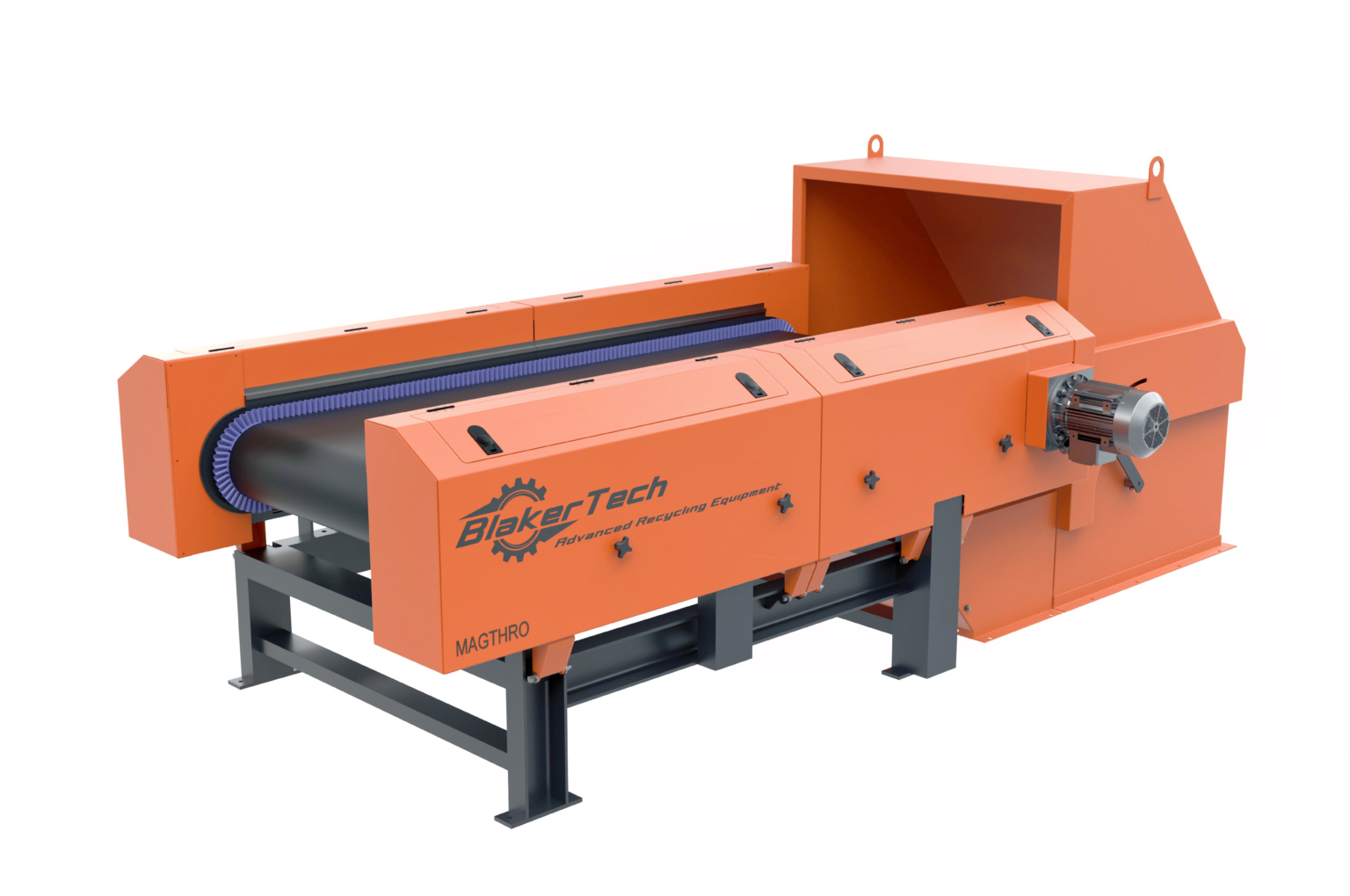
MagThro is a high-throughput eddy current separator designed for robust non-ferrous metal recovery from mixed waste streams. It excels at processing shredded electronics (WEEE), drinks cans, automotive scrap, and municipal waste. Using high-strength Neodymium magnets, MagThro cleanly separates valuable metals like aluminium and brass from non-metallic components such as plastics, timber, and rubber, enabling efficient, large-scale metal recovery.
-
How do you establish what equipment is best suited to a customer’s needs?
-
At BlakerTech, we take a consultative, engineering-led approach to ensure every solution is tailored to your material streams, site layout, and commercial objectives. Our process typically includes:
- Identifying the type of material being processed (e.g., WEEE, post-shredder residue, construction, or municipal waste)
- Establishing expected throughput volumes and target metal recovery outcomes
- Reviewing existing metal separation equipment on site
- Requesting representative samples for test processing
- Conducting a site evaluation and layout survey
Based on these insights, we recommend the optimal combination of ferrous and non-ferrous metal separation technologies, including eddy current separators, fluidised bed separators, and magnetic separation systems, to maximise recovery and operational efficiency.
We also provide tailored system design with optional accessories such as vibrating feeders, shakers, and cascade separation systems. Following the layout survey, 3D visualisations of the proposed setup are provided to help customers see exactly how the equipment will integrate seamlessly into their operations.
-
What happens if a product fails?
-
In the rare event of equipment issues, BlakerTech provides fast, reliable support to minimise downtime:
- Immediate telephone assistance from our experienced technical team
- Same-day or next-day dispatch of replacement parts from stock
- Access to trained technicians for onsite repairs or remote diagnostics
- Global shipping via trusted international carriers
- Ongoing support to maintain optimal performance of your metal recovery system
Our aim is to ensure your eddy current separator, fluidised bed separator, or other equipment is quickly restored, minimising disruption to your operations.
Read Our Google Reviews
Contact Our Expert Team
Call us on 01403 783634, email us on info@blakertech.com or fill in the form below.
"*" indicates required fields
Why Choose Us?
-
Manufactured in the UK
-
Bespoke By Design
-
Trusted Global experts
-
Cost Effective Solutions
-
Manufacture & Quality Checks
-
Full Installation, Training & Support