The Heavy-Duty Feeder Process
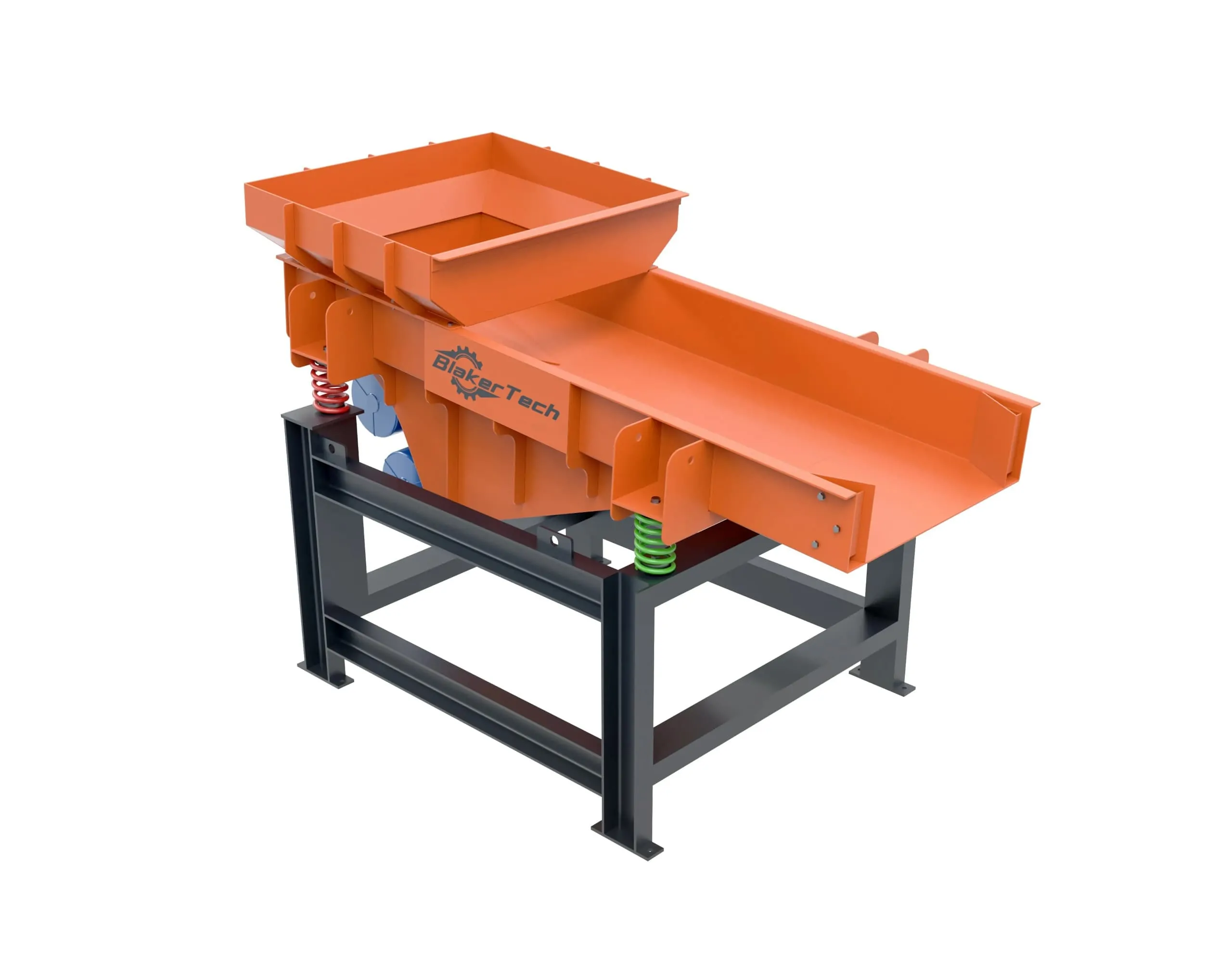
BlakerTech feeders use proven vibratory technology to deliver smooth, controlled material flow.
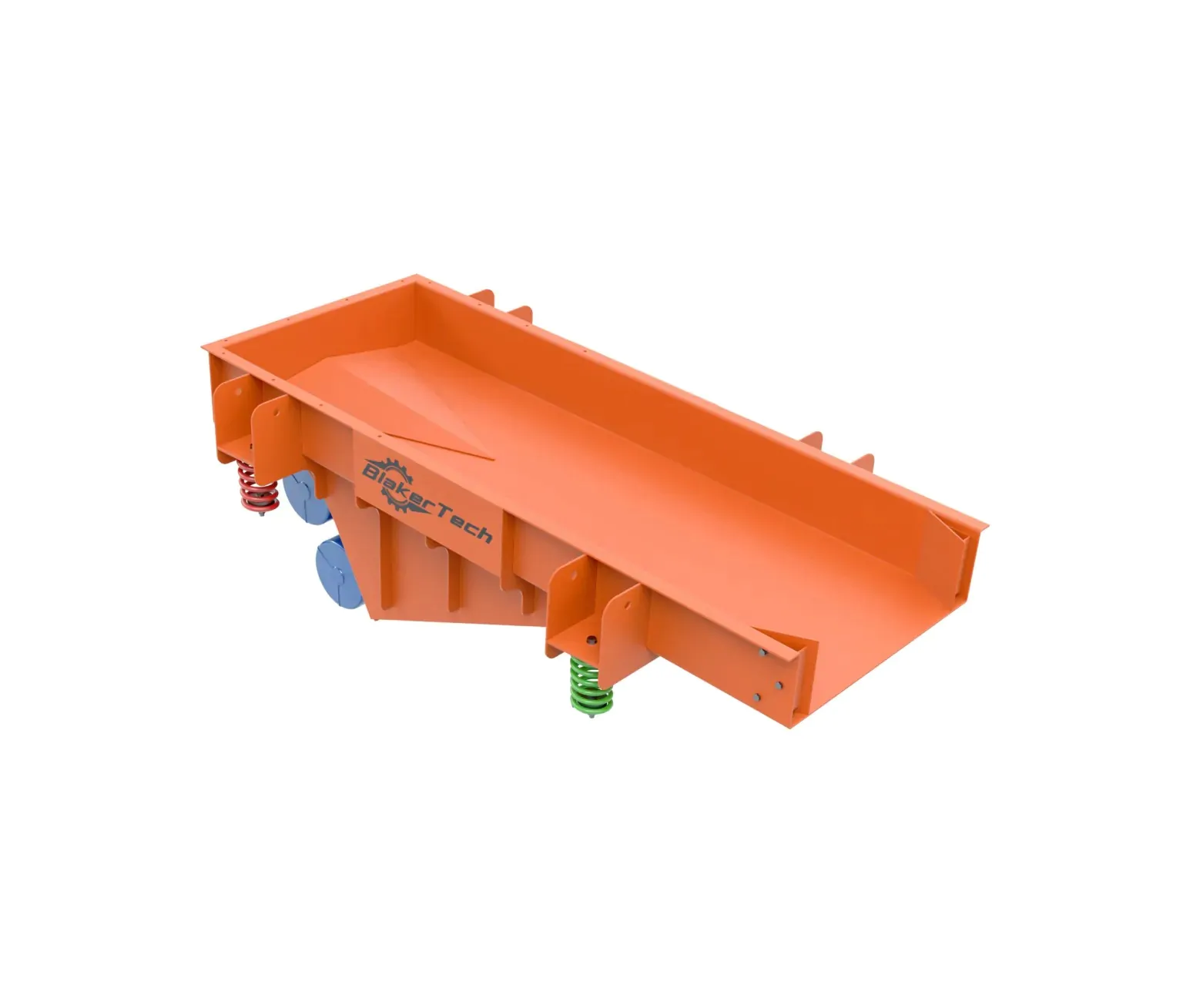
A precisely calibrated vibration motion moves bulk material steadily along the feeder tray, maintaining an even burden depth and preventing surges that can disrupt downstream processing.
The tray is mounted on robust isolation mounts to reduce operational stress, while heavy-duty drive assemblies provide the vibration strength needed to handle abrasive or bulky materials.
Installed ahead of conveyors, screens, crushers, or separation systems, the feeder ensures consistent processing conditions, prevents overload, and improves overall plant performance.
Our engineering team designs every feeder to integrate smoothly with new or existing production lines, delivering dependable performance tailored to your facility’s needs.
Read Our Google Reviews




Our Case Studies

Your Questions, Answered
Can’t find what you’re looking for? Get in touch with us today.
-
How does a vibratory feeder work?
-
A vibratory feeder works by using a vibration drive to generate controlled, repetitive movement of the feeder tray. As the tray vibrates, material is lifted and moved forward in small, controlled movements, creating a continuous flow towards the discharge point.
The frequency and amplitude of the vibration can be controlled to regulate how quickly material travels through the feeder. This allows the feed rate to be adjusted to match the requirements of downstream equipment.
For recycling applications, this provides a controlled and consistent feed of materials such as scrap metal, mixed waste, aggregates and other bulk solids, helping prevent surges and ensuring downstream equipment receives a steady flow of material.
The feeder can be configured around the material characteristics, required throughput and plant layout to provide reliable feeding within the wider recycling process.
-
What are the main applications of vibrating feeders?
-
Vibrating feeders are used to regulate and control the flow of bulk materials into conveyors, screens, crushers, separators and other downstream processing equipment.
In recycling and material processing plants, they provide a consistent, controlled feed rate, helping to prevent surges, reduce blockages and improve the efficiency of the overall processing line. Vibrating feeders can handle a wide range of materials, including scrap metal, mixed waste, aggregates and other bulk solids.
Read our guide on what a vibrating feeder is to learn more about their role in recycling applications.
Speak to our team to discuss your material and feeding requirements.
-
Are vibratory feeders suitable for bulk solids?
-
Yes. Vibratory feeders are well suited to moving and metering bulk solids at a controlled and consistent rate. They can be used with a wide range of materials, including mixed waste, shredded metals, aggregates and other heavy-duty materials.
BlakerTech vibrating feeders can be configured around the material characteristics, required throughput and wider process layout, helping provide a reliable feed to downstream equipment.
Get in touch to discuss your application and find the right feeding solution.
-
Why use a heavy-duty feeder in recycling?
-
Heavy-duty feeders provide reliable flow control, prevent interruptions, protect equipment from overload, and require minimal maintenance. They are ideal for tough recycling and waste environments.
-
Can BlakerTech feeders be retrofitted into existing lines?
-
Yes. Every feeder is custom-engineered to suit your layout, throughput, and material type, with full support from design through commissioning.
Need More Information?
If you can’t find what you are looking for, then please give me a call on 01403 783634 for a fast, friendly and helpful service.
James Ryan | National Sales Manager

Related Products

SandFlo

MagThro
Hoppers
Conveyors